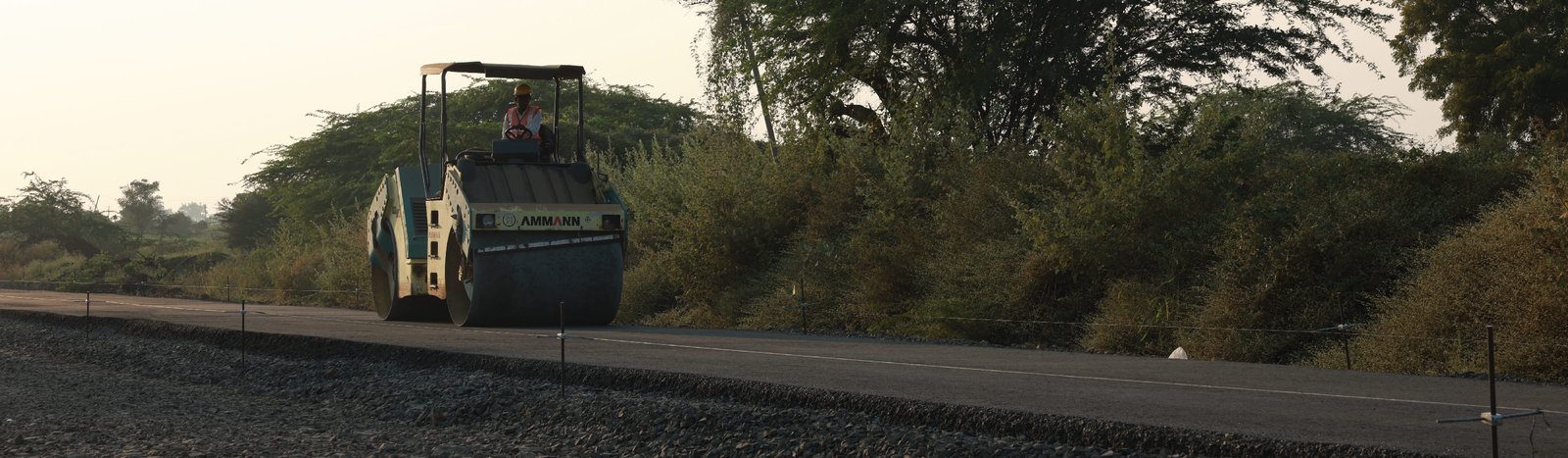
The Backbone Of India: How Roads Drive Regional Growth
Infrastructure is often spoken about in numbers — kilometers built, budgets allocated, or projects completed. But on the ground, infrastructure is something far more real. It is the road a farmer takes to reach the market, the route a child travels to school, and the path that connects one town’s potential to another’s opportunity.
In a country as vast and diverse as India, roads are not just a mode of transport — they are the backbone of regional growth. They determine how quickly goods move, how efficiently services reach, and how easily people connect with opportunities beyond their immediate surroundings.
When a road is developed or upgraded, the impact is immediate and visible. Travel time reduces. Transportation costs drop. Businesses gain better access to suppliers and markets. Farmers are able to sell produce beyond local mandis. Small towns begin to see new economic activity. What may seem like a stretch of asphalt is, in reality, a catalyst for transformation.
Rural connectivity, in particular, plays a critical role in inclusive development. Government initiatives like PMGSY have demonstrated how connecting villages to main roads can significantly improve livelihoods. Access to healthcare, education, and employment improves when connectivity improves. Regions that were once isolated begin to integrate into the larger economic system.
Highways, on the other hand, serve as the arteries of national growth. They enable long-distance trade, support logistics networks, and strengthen industrial corridors. A well-built highway is not just about speed — it is about reliability, safety, and long-term performance. It ensures that goods move seamlessly across states, supporting industries and strengthening the supply chain ecosystem.
However, building such infrastructure is not simply about laying roads. It requires engineering precision, disciplined execution, and long-term thinking. Factors like soil conditions, traffic load, drainage, material quality, and maintenance planning all influence how a road performs over time. Poor execution can lead to frequent repairs, higher costs, and disruption of movement — ultimately affecting the very growth the road was meant to enable.
This is where execution capability becomes critical. The ability to deliver projects on time, maintain quality standards, and manage large-scale operations determines whether infrastructure truly serves its purpose. Strong planning, experienced teams, and control over materials and processes ensure that roads are not just built, but built to last.
At its core, infrastructure development is about enabling movement — not just of vehicles, but of economies and aspirations. Every road carries with it the promise of better access, faster growth, and improved quality of life.
As India continues to expand its infrastructure network, the focus must remain on building with intent and responsibility. Because every road is more than a project — it is a pathway to progress.
Comments